
Project Overview

Purpose

  • To recall the essential skills, behaviours, and attributes of a CCA and reflect on the philosophy of care
  • To collaborate with CCA student classmates to prepare a Code of Conduct for the role of the CCA

Learning Outcomes Addressed

  • Identify the expectations of a CCA as a member of the care team.
  • Describe how the philosophy of care permeates the role of the CCA.
  • Discuss the attributes, skills and behaviours required to apply the philosophy of care.
  • Demonstrate verbal and non-verbal communication.
  • Explain the CCA’s responsibility for safety, health and wellness.
  • Apply ethical practice and advocacy.

Introduction & Philosophy of Care

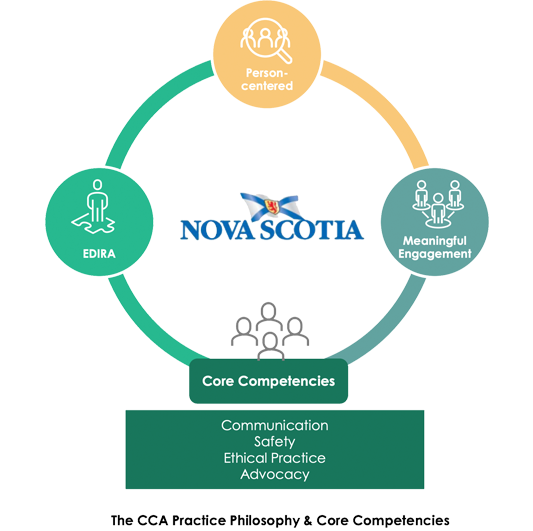
After the discussion of our team, we finalized that the Code of Conduct for Continuing Care Assistants is a set of rules and practices that should be followed by CCA professionals . This includes Person-Centered Care, Effective Communication and Collaboration, Professional Responsibility and Accountability, Safety, Health, and Wellness, Respect for Diversity and Inclusion, Confidentiality and Privacy, Continuing Education and Professional Development, Responsibility for Self-Care. By following these guidelines, we can promote independence, dignity, and enhance the quality of life for our residents. It is not only about care but also a partnership between individuals and their clients. We should respect their life experiences and autonomy. We all believe in the true care achieved through a collaborative approach, built on trust, respect, and understanding of each other's needs.

The CCA Code of Conduct

  1. Professional Responsibility and Accountability: (Parth) In most of the facilities team leader (nurses) is a supervisor for support workers. And they are mainly responsible and accountable for the client’s care and the other team members’ work. Accountability means a person willingly taking ownership of someone else’s actions, inactions, omissions, intentions, and decisions. For client safety, each member is accountable for their own actions as well. If the team leader is not on shift while CCA is working, they should report to the nurse who is on duty at the time. In community service, accountability is of the agency for the actions of the employees (support workers and supervisors).
  2. Safety, Health, and Wellness: (Parth) Safety is a basic need and a right of everyone because everyone wants to feel safe. Health is a state of well-being in all aspects of human life. Wellness is the accomplishment of the best health possible in all domains of human life.There are different types of safety, such as environmental, physical, social, and mental, which CCA is responsible for supporting at the workplace.Good wellness is achieved by getting well in physical, social, emotional, cognitive, and spiritual health. It is needed for any healthcare workers to not have emotional burnout, compassion fatigue, physical fatigue, and risk of injury which is related to one another.
  3. Respect for Diversity and Inclusion: (Junghyun) As a CCA, respecting diversity and inclusion is essential. CCA must be free from bias based on race, culture, gender, religion, or disability. Specifically, Canada adopted a multicultural policy in 1971 and enacted the Canadian Multiculturalism Act in 1988. All Canadians are legally protected from discrimination based on gender, ethnicity, age, sexual orientation, language, religion, origin, caste or class, income or wealth, beliefs or opinions, health, or disability. Individuals have unique backgrounds and cultures and are entitled to their own perspectives. CCA, especially those caring for patients, must respect this diversity and inclusion to foster a warm and supportive environment for all.
  4. Confidentiality and Privacy: (Junghyun) CCA must maintain client confidentiality and privacy. Confidentiality means respecting and protecting the personal and private information of others. CCA must treat all information regarding individuals receiving medical and care services and their caregivers as confidential. Information must be shared only among members of the healthcare team involved in the client's care. Even information about employers, colleagues, and other clients remains confidential. Respecting an individual's right to confidentiality is crucial for building trust and ensuring the safety of those receiving care. CCA must maintain client confidentiality and ensure that their privacy is protected.
  5. Continuing Education and Professional Development: (Michelle) Throughout the duration of your CCA course you are provided with great skills and tools that will start you out in the field but there is so much more to learn helping you excel in this line of work. As you enter into new work places you will find that there is a continuous cycle of learning and professional development. I strongly recommend partaking into any and all learning opportunities that are offered because you will never know when you will need them. For example, Non Violent Crisis Intervention is a great course to dive into because it not only teaches you how to handle difficult situations with clients but it will also help protect you from situations outside the workplace if ever needed.
  6. Responsibility for Self-Care: (Michelle) As a CCA and working in such a demanding field it is expected that there will be times and/or days that you are going to feel drained, tired, frustrated, etc. Before it gets to the point of burnout you need to step back to ensure you are looking after you and your needs. Take the time to find things that will relax you, bring you comfort and happiness and find your work life balance. First and foremost, leave work at work, do not take it home. Go for a walk, take a hot shower, workout, talk it out (without crossing the confidentiality line). Do whatever it is going to take to help you destress and decompress to ensure you have a satisfying work life balance.
  7. Person-Centered Care: (Ajay) The Philosophy of care in Nova Scotia is person-centred care. We respect all individuals with their autonomy and dignity. We also acknowledge their choices. We will make meaningful relationships with our clients by actively listening. As each person is unique and their preferences also differ from others so by active listening will help us to understand them better and help us to provide better care. We will help them with their daily household tasks and encourage them to do their daily routines independently as much as possible. So, they will love to live, not just spend time, which has been left.
  8. Effective Communication and Collaboration: (Ajay) Effective communication and collaboration are the key to success in the field of CCA. Not only speaking or writing but also listening carefully is a part of good communication. To better understand client's needs, we should pay attention to their body language and cues and perform our duty with empathy and respect. Collaboration means working with other healthcare providers like nurses, doctors and other team members. Share information, report changes and their daily care plans consistently. These two skills help us to build trust not only with our clients but also with their family members and co-workers. Working with a team reduces the stress on individuals, which leads a better care of residents as well as promotes the overall well-being of each person in the premises.

Reffrences:
Parth: Sorrentino textbook pg 154
Parth: SoP & Competency Framework CCA Essential Skills- Safety and Ethical Practice
Junghyun: (Chapter 1 : The Role and Responsibilities of the Support Worker, Sorrentino’s Canadian Textbook for the Support Worker, 2022)
Junghyun: (Chapter 7 : Caring About Culture and Diversity, Sorrentino’s Canadian Textbook for the Support Worker, 2022)

Our Team

This Code of Conduct is the result of a collaborative team effort. Michelle, Junghyun, Parth, and Ajay each contributed their expertise to create a comprehensive document reflecting the core values of a Continuing Care Assistant.

doctor

Ajay Kumar

CCA Student

Individual Assignment
doctor

Junghyun Kim

CCA Student

doctor

Michelle MacLean

CCA Student

doctor

Parth Sengal

CCA Student